Tuesday, February 14, 2017

Romantic Age (1790-1837) : Social Conditions

England rapidly transformed into an industrial country from an agricultural one during the Romantic Age. The Industrial Revolution in the country created turmoil and significant social changes too. Open fields were enclosed by walls and these enclosure increased efficiency and productivity in agriculture. The landscape of the country changed drastically but these were at the cost of increased slums and dislocation of the poor. A large portion of the population in the rural areas migrated to cities for jobs. But the increasing mechanization in factories led to a crisis of unemployment. People were paid low  wages and they suffered from poverty. The mindset of people also changed. People began to think differently from conventional ideas and a modern class consciousness emerged, the upper class, middle class and the working class. People began to be classified as those who owned land and those who did not.


The Middle Class and its Dominance

When Industrial Revolution broke out, the middle class grew more influential and larger. They became factory owners and gained immense profit. Even though the upper class possessed land, the industrial middle class possessed money. They had more than one source of wealth. They made fortunes out of manufacturing and trading. Merchants who trade commodities became more richer than the upper class. Education was another factor for the emergence of the middle class, they were well educated and were known for their profession rather than their family heritage. They began to criticize the upper class for leading a life of pomp and leisure and also the poor for not working hard. The middle class also provided less wages for lower class workers and shunted their growth. 
Even though they were powerful and influential, they didn't have the right to vote in the society. Only 2% of the total population of England actively involved in the election process. So the middle class along with other classes continuously protested for electoral reforms. Thus these protests led to the passing of the Great Reform Act of 1832. 
Increased mechanisation further worsened the social conditions. A large number of workers became unnecessary and they stayed unemployed.


The Liddite riots of 1811 which consisted of textile workers protesting against the introduction of new machines shook the Government. They entered factories and destroyed the machinery. The riot was later suppressed by force by the Government.

Peterloo Massacre : The common man suffered the most during the increased Irish immigration,increased unemployment, increased number of slums and The Economic Depression of 1819. On 16th August 1819, a crowd of 60,000 - 80,000 people gathered to listen a speech by Henry Hunt at St.Peter's field, Manchester. During this gathering,they demanded the reform of Parliamentary representation. The cavalry charged into this crowd and left 11 dead and hundreds of people injured.

Gordon Riots

The Gordon Riots of 1780 in London was against the Papists Act of 1778, which passed in order to decrease official discrimination against British Catholics.The riots came at the height of American War of Independence.After this reformation, the Catholics were not allowed to practise their religion, voting, owning land etc. The protests evolved to looting and other riots in the country. The rioters took control of the New Gate Prison, freed the prisoners and set fire to the prison. Once again, the army intervened and the rebellion was subdued.  

Monday, February 13, 2017

The Origin of Drama (Introduction)

The term 'Drama' is derived from the Greek word which means to act/action. It is a literary composition which is represented in performance. Aristotle's "Poetics" is the earliest surviving work of dramatic theory. According to Aristotle, the main aim for the existence of drama is to instruct and delight the spectators. He says that drama is an imitation of action (human). 


Western drama has its roots from the Classical Greek Drama and it originated during the festival of Dionysus, when there was much ritualized dancing and singing. There were two types of plays originated, they were tragedy and comedy plays. Tragedy represents the serious and grim reality whereas comedy represents the lighter side of human mind.

Tuesday, February 7, 2017

William Shakespeare,the Bard of Avon

The national poet of United Kingdom,William Shakespeare,was born in 1564 at Stratford -Upon-Avon. His prolific career spanned 37 plays,154 sonnets and two long poems. Some historians say that Shakespeare has written 38 plays. It is because of the fact that the author of Pericles is dubious. The number of plays written is still doubtful because of collaborative endeavors of Shakespeare with other authors.


Shakespeare was the son of John Shakespeare and Mary Arden. His father was a dealer of wool. He was admitted to Grammar School when he was nine years old. But after three years, his father was forced to withdraw him from the school because of decline in fortunes. When critics analyse his work, they find Shakespeare as a reservoir of knowledge. He was a boy who even lacked conventional education. He worked hard throughout his life and his collaborations with others also helped him to succeed. He was married to Ann Hathaway at the age of 18. Soon after they had three children, he moved from Stratford to London. At London, he got associated with Lord Chamberlain's Men, a company of actors. Soon he began to write plays for the Globe Theatre. It was later named as Shakespeare Globe Theatre.

Monday, February 6, 2017

Noun


A noun is a naming word used to identify a name, a place or a thing. Nouns can be broadly divided into Concrete and Abstract nouns.
Words which name person,place or thing which has a physical existence are called Concrete nouns. Eg. Daniel, Antarctica, air etc.
Names of things which we can only feel are known as Abstract Nouns. They can refer to quality, actions or feelings. For Eg. anger,happiness etc.
Concrete Nouns can be divided into four,

  1. Proper Noun (They have no plural form, Hint-  may begin with capital letter)
  2. Common Noun ( Name of the same kind )
  3. Material Noun (Name of a material)
  4. Collective Noun (Group name)
Exercises


  1. He is a teacher. ('Teacher' is a common noun)
  2. Is tomato,a fruit or a vegetable ?( 'Tomato','fruit' and 'vegetable' are common  nouns )
  3. Mary has a good knowledge of English ( 'Mary' and 'English' are proper nouns, but 'knowledge' is an abstract noun.)
  4. James brought a bicycle. (Here 'James' is a proper noun whereas 'bicycle' is a common noun)

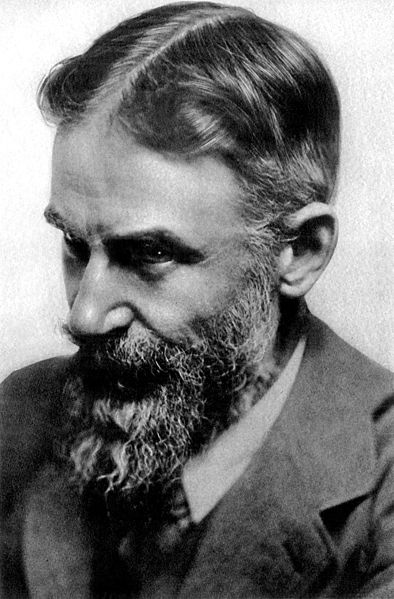
Bernard Shaw : Early Childhood


File:George bernard shaw.jpg
George Bernard Shaw was an Irish playwright and critic who has significantly influenced the Western theatre and culture. He was born in Dublin in 1856. His parents were not the conventional family which every child would dream of. Maybe its because of his experiences (childhood), he excelled as a critic and polemicist later in his life. He was the only child of George Carr Shaw and Lucinda Elizabeth Shaw. His father was employed at the law courts and later he became a grain merchant. His mother lived largely for her art and pursued her career as a opera singer. Shaw's education was ordinary, but he loved to visit  the Irish National Gallery to study pictures and soon had a sound knowledge of some great composers too.Shaw had a good understanding of opera,music etc, it may be the influence of her mother.   Many critics say that the dramas of Bernard Shaw's dramas has a opera-like quality that makes him unique when compared to other dramatists.

Thursday, December 15, 2016

VITAMINS AND THEIR STRUCTURES


VITAMIN A - RETINOL


VITAMIN B1 - THIAMINE


VITAMIN B2 - RIBOFLAVIN


VITAMIN B3 - NIACIN


VITAMIN B6 - PYRIDOXINE


VITAMIN B12 - CYANOCOBALAMIN


VITAMIN C - ASCORBIC ACID


VITAMIN D - CALCIFEROL


VITAMIN E - TOCOPHEROL


VITAMIN K - PHYLLOQUINONE


PRNCIPLES OF INHERITANCE OVERVIEW POINTS

Genetics: Study of heredity and variation.

Heredity: Inheritance of characters transmitted from parents to offsprings.

Variation: Degree by which progeny differ from their parents.

Father of genetics- Gregor Johann Mendel.


He conducted experiments in garden pea(Pisum sativam)
Reasons for selecting garden pea,

1.Bisexual flower.
2.Self and cross pollination takes place.
3.Contrasting pairs of characters.
4.Short life span.


There is a particular gene for a particular character.
For indicating a gene ,there are two alleles.


Experiment

1.True breeding
(Producing same character from same plants by producing them for 3-4 generation,made them pure for that specific character)
By self pollination,he created two pure breeding Tall and a pure breeding dwarf.
A character has two forms a dominant and a recessive form.
For example Height has two forms one is Tall and the other is dwarf.

2.A pure breeding Tall is crossed with a pure breeding dwarf.
At the time of gamete formation,the two factors separate or segregate.
The next generation is known as F1 generation or first filial generation.

In F1 generation, Dominant character T is expressed.
And T is completely dominant over t -- complete dominance.
Thus it expresses tallness.
This observable character is called phenotype.The genetic constitution is called genotype.
3.Then the F1 generation is self polinated.
Tt*Tt
At gamete formation,both alleles segregate,
TT Tt Tt tt are formed
Phenotype - 3 tall and 1 short is formed.
Genotype - 3genotype TT Tt tt
Phenotypic ratio-3:1
Genotypic ratio-1:2:1

Monohybrid cross-The character of one is crossed.
Reginald C Punnett brought a square called Punnett square or check board for easily finding the phenotype and genotype.
Test cross-A cross between F1 hybrid and its r
Monohybrid test cross ratio-1:1
Dihybrid test cross ratio-1:1:1:1


Incomplete dominance- The phenomenon which occurs when in a cross made between a dominant and a recessive ,the F1 offspring do not show dominant trait but are intermediate between dominant and recessive.
Codominance-The phenomenon by which both the alleles in a heterozygote express themselves.
Multiple alleles-Genes having more than one alleles in a population.
Pleiotropy-The ability of a gene to have many effects.
Polytene chromosomes-Large sized chromosomes

Linkage-The phenomenon of co existence of two or more genes in the same chromosome.

Recombination-The reshuffling of the parental genes into new combinations.

Recombinant-The product of recombination.

Crossing over-The phenomenon by which exchange of segments takes place between non sister chromatids of homologous chromosomes.


Chromosome map-A linear graphic representation of the sequence and relative distances of the various genes present in the chromosome.

Chromosome mapping
-The method of preparing maps of a species.

Mutation-The sudden heritable change in the genotype of an organism.

Mutants-The individuals showing mutations.

Muton-The smallest segment of DNA which can undergo mutation.

Chromosomal aberrations-The structural changes in a chromosome.

Point mutation-Mutation which arises due to change in a single base pair of DNA.

Mutagens-The physical and chemical factors which bring about mutations.

Pedigree analysis-An analysis of traits in several generations of s family.

Pedigree-The ancestral history in an individual.

Proband-The person from whom case history of the pedigree starts.

Proposity-Male pro band.

Proposita-Female pro band

Mendelian disorders-Genetic disorders caused due to alteration or mutation in single gene.

Phenylpyruvic idiots-Persons with phenylketonuria.

Chromosomal disorders-Genetic disorders caused due to absence or excess or abnormal arrangement of one or more chromosomes.

Ploidy-The numerical changes of chromosomes.

Polyploidy
-Occurence of more than two genomes.

Euploidy-The numerical changes of chromosomes in genome level.

Aneuploidy-The numerical changes of chromosomes at an individual level.

Trisomy-2n+1 condition

Monosomy-2n+1condition

Principles of inheritance and variation (NOTES PART 1)


Genetics: Study of heredity and variation.

Heredity: Inheritance of characters transmitted from parents to offsprings.
Variation: Degree by which progeny differ from their parents.
Father of genetics- Gregor Johann Mendel.
He conducted experiments in garden pea(Pisum sativam)

Reasons for selecting garden pea,
1.Bisexual flower.
2.Self and cross pollination takes place.
3.Contrasting pairs of characters.
4.Short life span.
There is a particular gene for a particular character.
For indicating a gene ,there are two alleles.
Experiment
1.True breeding
(Producing same character from same plants by producing them for 3-4 generation,made them pure for that specific character)
By self pollination,he created two pure breeding Tall and a pure breeding dwarf.
A character has two forms a dominant and a recessive form.
For example Height has two forms one is Tall and the other is dwarf.
2.A pure breeding Tall is crossed with a pure breeding dwarf.
At the time of gamete formation,the two factors separate or segregate.
The next generation is known as F1 generation or first filial generation.
In F1 generation, Dominant character T is expressed.
And T is completely dominant over t -- complete dominance.
Thus it expresses tallness.
This observable character is called phenotype.The genetic constitution is called genotype.
3.Then the F1 generation is self polinated.
Tt*Tt
At gamete formation,both alleles segregate,
TT Tt Tt tt are formed
Phenotype - 3 tall and 1 short is formed.
Genotype - 3genotype TT Tt tt

Phenotypic ratio-3:1
Genotypic ratio-1:2:1
Monohybrid cross-The character of one is crossed.
Reginald C Punnett brought a square called Punnett square or check board for easily finding the phenotype and genotype.

Radioactive dating(Uranium)

Uranium is a radioactive element so it decays into an isotope of another element at a fixed rate. Uranium 238 is an isotope of uranium and it has a half life time of about 4.5 billion years.In the case of Uranium ,it finally forms lead 206.Scientists know the rate of transformation of uranium 238 to lead 206,they can determine the age of the rock containing lead 206.
Scientists calculate radioactive dating of rocks by taking the ratio of uranium 238 to lead 206.

Image courtesy: Wikispaces

Organisms and populations (BOTANY PART 1)


Ecology:The branch of biology that deals with the study of relationships of living organisms with the abiotic and biotic components of their environment.


Ecosystem ecology:The branch of ecology which deals with the study of ecosystems.

Global ecology:The study of climatic change,biodiversity conservation and ecological sustainability.

Species ecology:The study of an individual organism in relation to its environment.

Community ecology:The study of a group of organisms in relation to their environment.


Population:A group of individuals of a plant or animal species,inhabiting a given area.


Community:An assemblage of the populations of organisms that live under a given area and interact with one another.

Biome:A large regional unit characterized by a major vegetative type and associated fauna found in a specific climatic zone.

Biosphere:All terrestrial biomes and aquatic systems of the earth on the global level.

Habitat:The specific place where an organism lives.

Niche:The habitat together with the functions
.


Euryhaline:Organisms which can tolerate wide ranges in salinity.

Euryhaline
Stenohaline:Organisms which can live within a narrow ranges of salinity.

Auroral:Animals which are active at dawn only.

Vesporal:Animals which are active at dusk only.

Edaphic factors:The factors which relate to the structure and composition of the soil.

Conformers:The organisms which cannot maintain a constant internal environment.

Ephemerals:Plants which complete their life cycle within a short period.

Succulents:Xerophytes which have the capacity to absorb and store water.

Acclimatization:The gradual physiological adjustment to slowly changing new environment conditions.

Wednesday, April 24, 2013

Tuesday, April 23, 2013

TRIGONOMETRY

Trigonometry is a branch of mathematics which deals with measures of triangles especially right angle triangles.
In trigonometry, there are various ratios.
They are named as sine, cosine, tangent, cosecant , secant and cotangent
Opposite side/ hypotenuse = sin
Adjacent side/hypotenuse = cos
Opposite side/adjacent side = tan
Hypotenuse/opposite side = cosec
Hypotenuse/adjacent side = sec
Adjacent side/opposite side = cot

Friday, March 29, 2013

Polygons

Polygon

Polygon is a closed figure with line segments.

Names of polygons

3 sided polygon : Triangle
4 sided polygon : Quadrilateral
5 sided polygon : Pentagon
6 sided polygon : Hexagon
7 sided polygon : Heptagon
8 sided polygon : Octagon
9 sided polygon : Nonagon
10 sided polygon : Decagon

Main points to remember

The sum of interior angles of a polygon is ( n - 2 ) 180.

The sum of the exterior angles of any polygon is 360.

The No. of sides of a regular polygon = Sum of exterior angles/one exterior angle = 360/one exterior angle.  


Circles

Circle

It is a locus of points drawn at a definite distance from a fixed point.


Arc : A part of circumference of a circle.
Chord : A line segment within a circle touching two points on it.
Circumference : Perimeter of a circle = 2*pi*r.
Value of pi : 3.14 or 22/7
Area of a circle : pi*r*r
Length of a arc : 2*pi*r* x/360
Area of a sector : pi*r*r*x/360

Similar triangles

Similarity

If two objects are similar, they would have the same shape and proportion.

Theorems to determine similarity.

If three angles of a triangle are equal to three angles of another triangle, then these triangles are similar and the sides opposite to equal angles are proportional.

If two angles of a triangle are equal to two angles of another triangle, then these triangles are similar.

If three sides of a triangle are proportional to three sides of another triangle, then these triangles are similar

If two sides of a triangle are proportional to two sides of another triangle and their including angles are equal then these triangles are similar.

Main points to remember. 

The line joining the midpoints of two sides of a triangle is parallel and half as long.

The centroid of a triangle divides the median into 2 : 1 
 

Squares of numbers 11 to 30

11 to 30

Square of 11 = 121
Square of 12 = 144
Square of 13 = 169
Square of 14 = 196
Square of 15 = 225
Square of 16 = 256
Square of 17 = 289
Square of 18 = 324
Square of 19 = 361
Square of 20 = 400
Square of 21 = 441
Square of 22 = 484
Square of 23 = 529
Square of 24 = 576
Square of 25 = 625
Square of 26 = 676
Square of 27 = 729
Square of 28 = 784
Square of 29 = 841
Square of 30 = 900

Right angle triangle sides ( Pythagorean triplets )

Right angle triangle sides

3,4,5

5,12,13

7,24,25

8,15,17

9,40,41

11,60,61

12,35,37

13,84,85

16,63,65

20,21,29

Identifying different numbers - NTSE

Different numbers.

Natural numbers : The counting numbers like 1,2,3,4,5.. are called natural numbers.

Integers : All natural numbers, their negatives and 0 are called integers.

Whole numbers : All natural numbers and 0 are called whole numbers.

Rational numbers : The numbers which can be expressed in the form p/q,where p and q are integers and q not equal to 0, are called rational numbers.

Irrational numbers : Any real number which cannot be expressed in the form p/q, where p and q are integers and q not equal to 0, are called irrational numbers.

Real numbers : Both rational numbers and irrational numbers together are known are real numbers.

Absolute value of real number : ( Modulus ) The non negative value of a number without regarding its sign.

Prisms

Prisms

They are 3- dimensional figures.

Different types of prisms

Rectangular prism.

Square prism.

Cylinder ( Circular Prism ).  

Cube etc.

Main points.

Sum of the areas of all faces excluding the base on top and bottom of the prism is the L.S.A. of a prism.

The Lateral Surface Area or L.S.A. of any prism is equal to the product of the base perimeter and its height.

L.S.A. =  Base perimeter * Height.

The Total surface area  is the sum of the areas of all the faces. T.S.A. of any prism is equal to the sum of the L.S.A and double the base area.

T.S.A. = L.S.A. + 2 * Base area.

Volume of a prism is the capacity of the prism that it can hold. Volume of any prism is equal to the product of the base area and its height.

Volume = Base area * Height.